
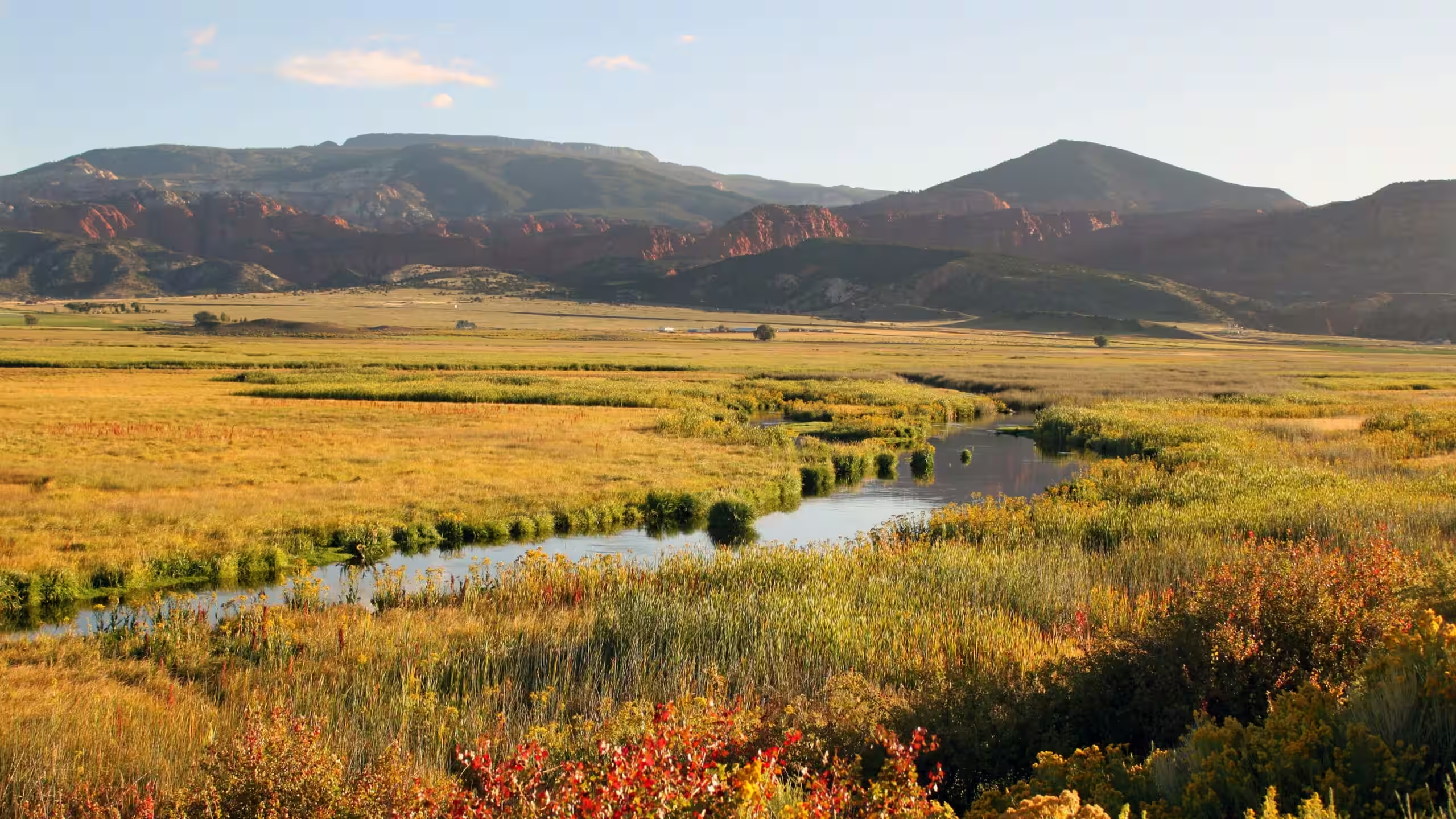
Bicknell lies in a remote, sparsely populated part of Utah. When the area was settled, reaching it was difficult. Early residents built their own roads and traveled on foot, on horseback, or in horse-drawn wagons.
The wagon era, from 1850 to 1920, shaped the town's early years. Most Bicknell settlers came by wagon or handcart from Nauvoo, Illinois, between 1847 and 1868. A trip by wagon to the county seat in Junction or to Sevier County to visit relatives or conduct business took two to three days each way.
Most early settlers were members of The Church of Jesus Christ of Latter-day Saints. The town was first named Thurber after Albert King (A.K.) Thurber. At age 23, he stopped in Utah while traveling from Rhode Island to seek gold in California and joined the Church.
After serving as a church and community leader in Spanish Fork, Thurber was sent to Richfield by Brigham Young to help negotiate peace with Native communities. He later became the Sevier Stake President and signed a peace treaty with three Paiute groups at Fish Lake in 1876.
In 1879, while leading stockmen into the valley to graze cattle, he built the first cabin along the Fremont River at the site that became Thurber. He died of stomach cancer at age 62.
Early settlers homesteaded near streams to find water for crops and daily use. They collected water from ditches and the Fremont River, then let it settle in large barrels before drinking it. In freezing weather, they hauled blocks of ice home to melt for cooking, drinking, and washing. Unsafe water contributed to illness among residents.
After the town moved, buried pipes brought water from Cottonwood Canyon, north of Bicknell, and later from springs on Thousand Lake Mountain. In 1992, the town built a pump house at a spring south of town to supplement the mountain springs.
A dependable supply of drinking water remains a priority for Bicknell. The Fremont River has long supplied most of the valley's irrigation water.
Many early settlers kept small herds of cattle or sheep. With ample grazing in the valley, fences were uncommon, and residents shared herds and grazing grounds. As livestock numbers grew, they built fences and moved grazing into the surrounding mountains and deserts.
Farming later provided additional livestock feed, though short growing seasons made it challenging. Today, family operations carry on Bicknell's ranching tradition.
Women have played prominent roles in Bicknell's families, schools, healthcare, and community life. Early nurses and midwives delivered most newborns and cared for residents with diphtheria, typhoid, and other contagious illnesses.
During World Wars I and II, women worked on family farms. They also served as Minute Women during World War II, salvaging rationed materials to support the war effort.
In 1965, local women formed a civic club to help beautify Bicknell. Their care and creativity have shaped the town's yards, gardens, homes, handicrafts, and home arts.
Education was a priority for early settlers, and women opened their homes as classrooms. The first school in present-day Bicknell is now the DUP building on Main Street.
Bicknell has long been home to Wayne Middle School, Wayne High School, and the district offices. The town also had an elementary school until it combined with Loa's in 1972.
Women have made up the majority of local educators. Among them was Anne Snow, the only school superintendent to serve twice. She also wrote Rainbow Views, A History of Wayne County.
We’re here to assist you. Fill out the form below.